
Centralized menu and inventory data systems reduce restaurant food waste by providing real-time visibility into ingredient usage patterns, enabling precise demand forecasting, and identifying overstock situations before spoilage occurs. These integrated platforms connect recipe data with inventory tracking, creating a closed-loop system where every ingredient is accounted for from delivery through plate presentation or disposal.
Food waste represents one of the restaurant industry's most pressing challenges—both economically and environmentally. The average restaurant discards 4-10% of the food it purchases before it ever reaches a customer's plate. For a restaurant generating $1 million in annual revenue, this translates to $40,000-$100,000 in lost profits. Nationally, restaurants waste approximately 22-33 billion pounds of food annually, contributing significantly to environmental degradation while hemorrhaging profitability.
Key insight: Centralized menu and inventory systems attack this problem by transforming guesswork into data-driven decision making. When you know exactly how much of each ingredient each menu item requires, and you can track sales patterns precisely, purchasing becomes strategic rather than reactive.
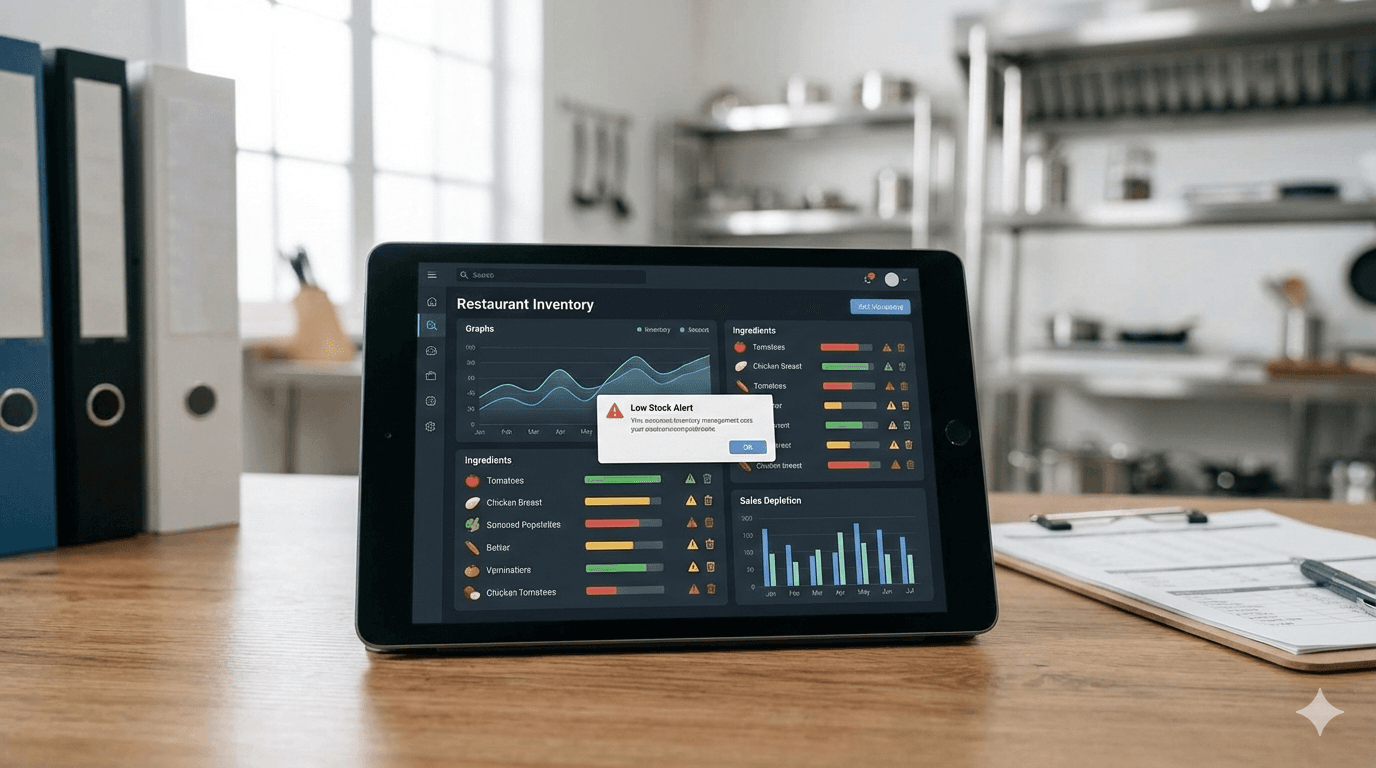
The Connection Between Menu Data and Waste Reduction
Understanding Recipe-Driven Inventory Management
Traditional inventory management operates reactively: monitor stock levels, reorder when supplies run low, hope you've ordered the right quantities. This approach creates waste through:
Traditional Approach Problems
- Over-ordering: Buying excess ingredients "just in case" that spoil before use
- Under-utilization: Failing to identify ingredients approaching expiration that could be featured in specials
- Recipe inconsistency: Kitchen staff using varying quantities, making accurate forecasting impossible
- Blind spots: Not knowing which menu items drive ingredient consumption
Centralized systems eliminate these issues by connecting recipe data directly to inventory tracking. When recipes specify exact ingredient quantities and the system tracks every sale, you gain precise visibility into ingredient depletion rates.
Real-Time Inventory Visibility
Modern integrated platforms provide real-time inventory updates:
Integrated System Benefits
- Automatic depletion: Each menu item sold automatically deducts ingredients from inventory
- Expiration tracking: Ingredients flagged by purchase date with countdown to expiration
- Usage variance: Alerts when actual usage deviates from expected consumption based on sales
- Cross-location visibility: Multi-unit operations see inventory levels across all locations simultaneously
Quantified Waste Reduction Benefits
Cost Savings from Reduced Spoilage
Restaurants implementing centralized menu and inventory systems report substantial waste reductions:
Before Integration
- 4-10% food waste (industry average)
- $20,000-$50,000 waste annually
- 12-15x inventory turnover
- 4-8 hours weekly for counts
Significant profit loss
After Integration
- 2-4% food waste (optimized)
- $10,000-$20,000 waste annually
- 18-24x inventory turnover
- 1-2 hours weekly verification
50-60% waste reduction
Savings Summary (For $500K Annual Food Costs)
Annual Waste Savings
$10,000-$30,000
Labor Hours Saved Annually
150-300 hours
Impact on Profit Margins
+2-4%
Significant in an industry where net profit margins average 3-6%
Strategic Approaches to Waste Reduction
Precise Demand Forecasting
Centralized systems analyze historical sales data to predict future demand:
- Pattern recognition: Identify which menu items sell strongly on specific days, during particular seasons, or in certain weather conditions
- Automatic adjustments: Modify purchasing recommendations based on upcoming events, holidays, or promotional activities
- Variance alerts: Flag when actual sales deviate significantly from forecasts, helping identify operational issues
Real result: One restaurant group reported reducing produce waste by 35% simply by improving demand forecasting accuracy, ordering quantities that matched actual consumption rather than estimating conservatively high.
Dynamic Menu Engineering
Integrated data reveals which menu items generate waste through low sales or high ingredient spoilage:
- Identify slow-moving items: Track dishes with consistently low sales that tie up ingredients
- Calculate true profitability: Factor waste costs into menu item profitability analysis
- Optimize ingredient overlap: Redesign menus to maximize ingredient usage across multiple dishes
Example: Menu Optimization Results
A restaurant discovered that three menu items accounted for 40% of produce waste due to low sales volumes. Removing these items and redistributing their ingredients across higher-volume dishes reduced waste by 18%.
Ingredient Utilization Optimization
Centralized systems help maximize ingredient usage:
- Whole-ingredient utilization: Track primary cuts versus trim, identifying opportunities for using scraps in stocks, sauces, or staff meals
- Cross-utilization strategies: Design specials featuring ingredients nearing expiration from slow-selling items
- Batch cooking insights: Optimize prep quantities based on actual consumption patterns rather than traditional batch sizes
Sustainability Benefits Beyond Cost Savings
Environmental Impact Reduction
Food waste in landfills generates methane, a greenhouse gas 25 times more potent than carbon dioxide. Reducing restaurant food waste by 50% creates meaningful environmental impact:
Carbon Reduction
Equivalent to removing several vehicles from roads annually
Water Conservation
Preserves water used in food production
Land Use Efficiency
Reduces pressure on agricultural land
Brand Differentiation
Consumers increasingly favor restaurants demonstrating environmental responsibility:
- 75% of millennials consider sustainability when choosing restaurants
- Customer loyalty: Sustainability initiatives correlate with repeat visit rates
- Premium pricing: Customers pay 5-10% premiums for sustainably operated restaurants
- Marketing opportunities: Waste reduction achievements provide compelling brand stories
Implementation Strategy
Step 1: Establish Baseline Metrics
Before implementing integrated systems, document current waste levels:
- Conduct weekly waste audits for 4-6 weeks
- Categorize waste by type (spoilage, over-production, plate waste)
- Calculate waste as percentage of food costs
- Identify highest-waste ingredients and menu items
Step 2: Select Integrated Platform
Choose software connecting recipe management, inventory tracking, and sales analysis with these essential features:
- Recipe costing with ingredient quantities
- Automated inventory depletion from sales
- Purchase order generation based on depletion rates
- Reporting on waste by category and ingredient
Step 3: Input Accurate Recipe Data
System effectiveness depends on accurate recipe information:
- Document all recipes with precise ingredient quantities
- Include prep recipes (stocks, sauces, components)
- Verify recipes with kitchen staff to ensure accuracy
- Update recipes whenever modifications occur
Step 4: Train Team on System Usage
Successful implementation requires team buy-in:
- Train receiving staff on proper inventory entry
- Educate kitchen managers on reviewing variance reports
- Teach chefs to design menus using system insights
- Empower staff to flag data discrepancies
Step 5: Monitor and Optimize
Continuous improvement requires ongoing analysis:
- Review waste reports weekly
- Adjust purchasing based on actual usage patterns
- Refine recipes to improve ingredient utilization
- Celebrate wins and share results with team
Case Study: Real-World Results
12-Location Casual Dining Chain Implementation
Baseline Annual Waste
$840,000
6% of $14M food costs
Year 1 Annual Waste
$420,000
3% of food costs
Annual Savings
$420,000
50% reduction
Implementation Cost
$48,000
First-Year ROI
875%
Inventory Turnover
+15%
Labor Hours Saved
22%
Conclusion: Waste Reduction as Profit Center
Reducing food waste through centralized menu and inventory data transforms a persistent cost center into a significant profit opportunity. The combination of cost savings, environmental benefits, and operational improvements creates compelling justification for investment in integrated systems.
As ingredient costs continue rising and sustainability expectations intensify, restaurants embracing data-driven waste reduction position themselves for long-term competitive advantage. The tools exist, the technology is proven, and the financial returns are substantial—making waste reduction through centralized systems one of the highest-ROI investments available to restaurant operators today.