New York prepackaged food
A new label requirement for food prepared on site.
If you prepare and package food before a customer orders, New York's new allergen labeling law will apply to you.

The requirement
What New York's Prepackaged Food Law Requires
New York's allergen labeling requirement for prepackaged food comes from Senate Bill S5381A (Assembly Bill A6558A), signed into law by Governor Kathy Hochul in November 2025. Effective November 12, 2026, the law adds Section 1357 to the New York Public Health Law, requiring food establishments to include a written allergen notification on the package or on a label attached to the package.
The 9 major allergens
Food establishments must disclose the presence of any of these 9 major allergens in the food they prepare and package.
- Milk
- Eggs
- Fish
- Crustacean Shellfish
- Tree Nuts
- Peanuts
- Wheat
- Soy
- Sesame
Does the timing of packaging matter?
How and when you package your food can determine whether this new requirement applies.
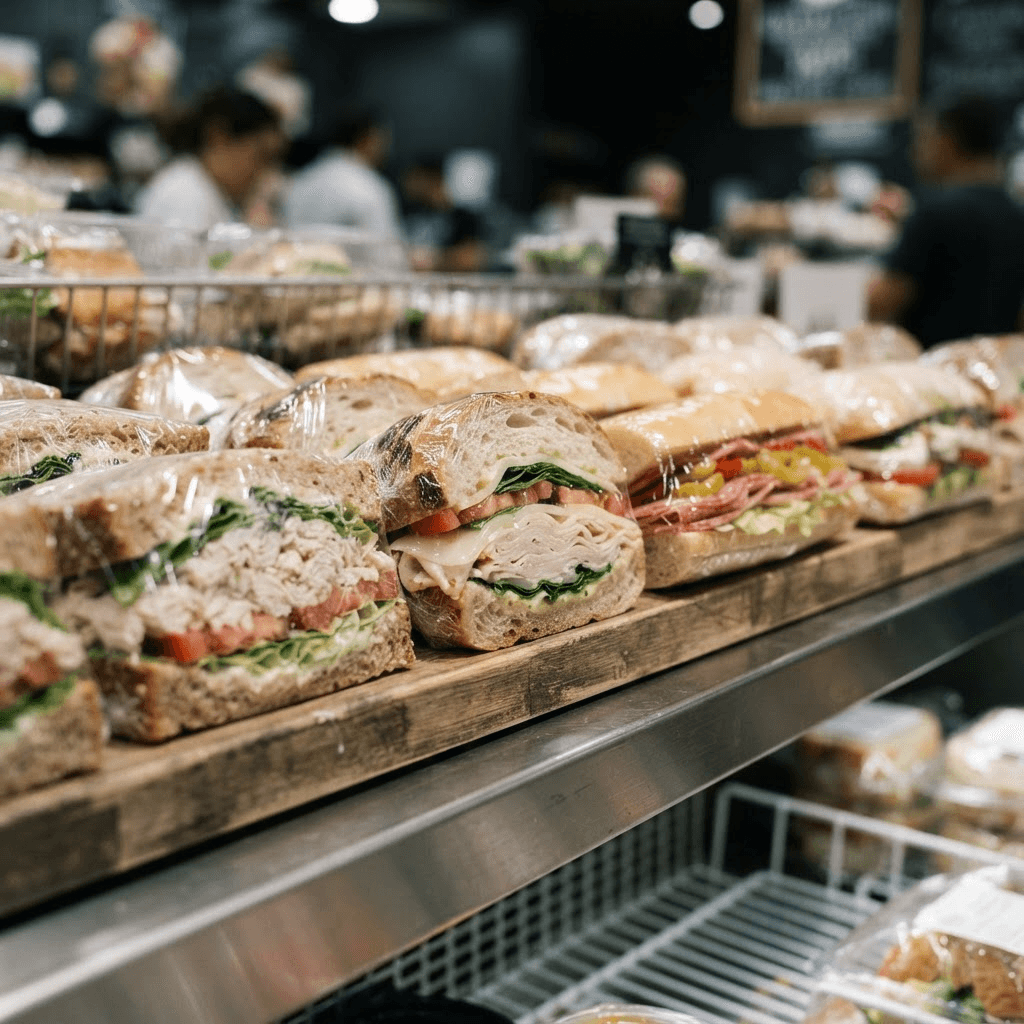
Packaged before the order
Prepared, packaged and sold on the same premises. This is covered by the new requirement.
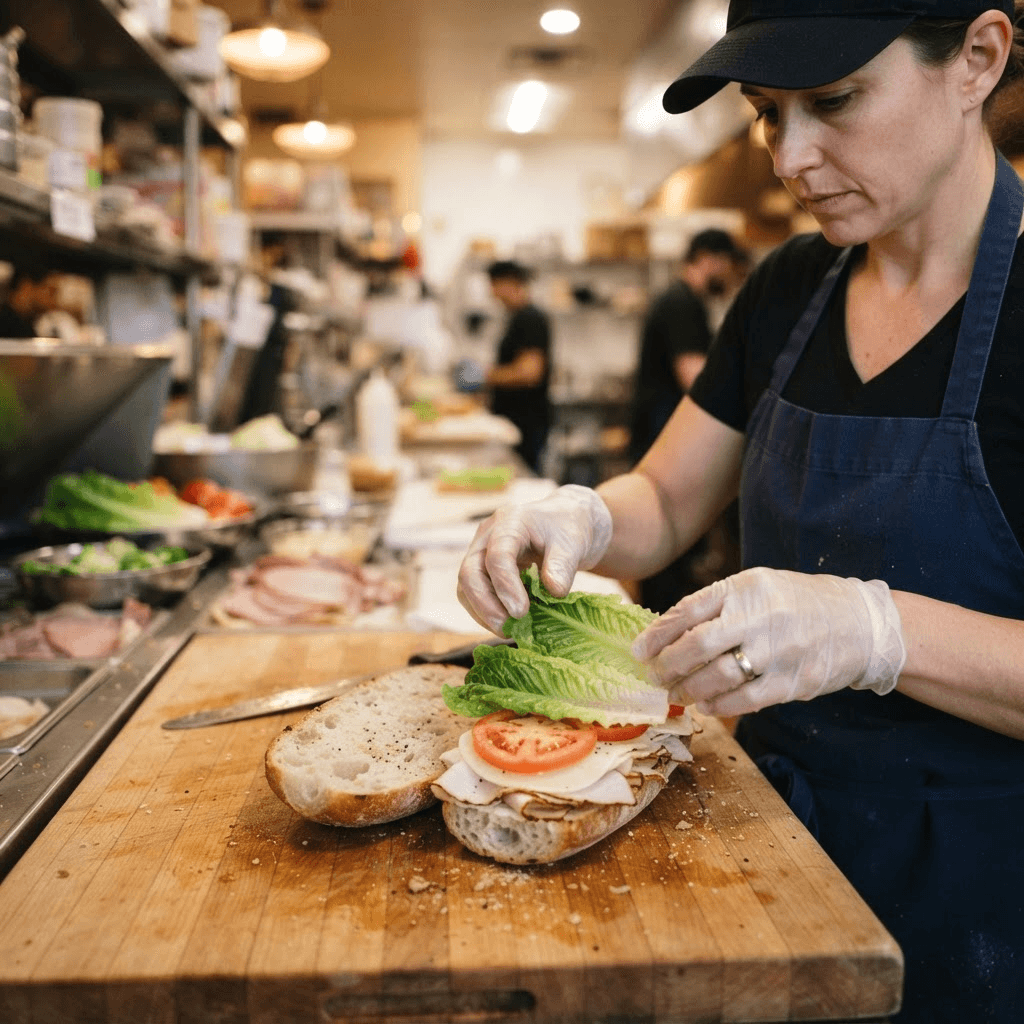
Packaged after the order
This law excludes food packaged after a customer orders. Made-to-order items wrapped at checkout are not covered.
Who this covers
The law names specific types of food establishments.
- Delis
- Bakeries
- Sandwich shops
- Ice cream parlors
- Cafeterias
- Food trucks
What the label must show
Allergen information must appear on the package itself, or on a label attached to the package. A digital menu alone does not satisfy this requirement.
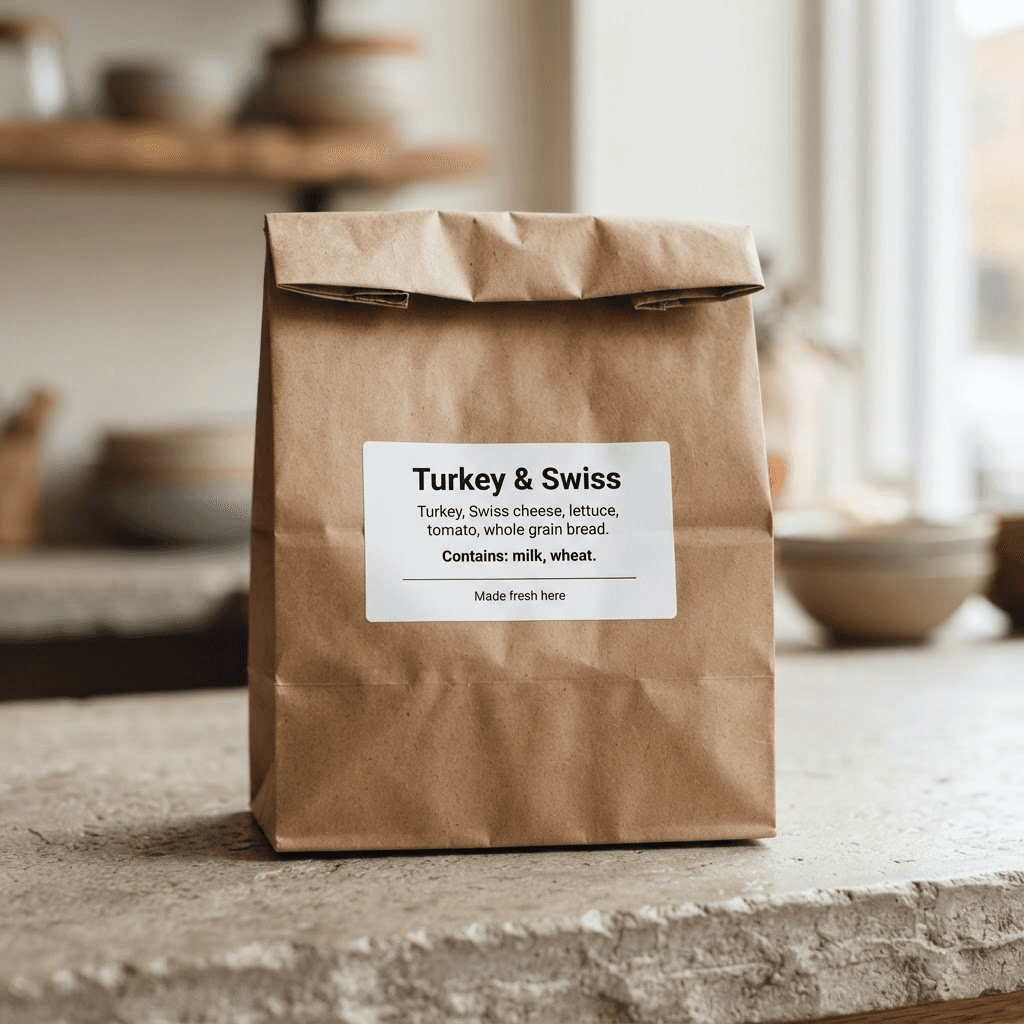
Illustrative example.
Prepare your labeling workflow
A few key steps can help you get ready for the new requirement.
Identify covered products
Determine which of your foods are prepared and packaged on the same premises.
Check recipes and ingredients
Review your recipes, ingredient lists and allergen information.
Review label output
Make sure your package or attached label includes the required allergen information.
Plan for ingredient changes
Set a process to keep labels accurate when ingredients or recipes change.
This is an informational checklist, not an automated legal determination.
Talk through your products with FoodiniFAQ
Common questions
Source: New York Public Health Law §1357
Review the legislation