Choosing between QR code menus and digital menu boards represents one of the most critical technology decisions facing restaurant operators today. Both solutions offer compelling advantages over traditional printed menus, but they serve different operational needs, customer experiences, and budget constraints.
This comprehensive comparison explores the strengths, limitations, and ideal use cases for each approach, providing restaurant managers with a clear framework for making the right choice for their specific business.

Understanding QR Code Menus: The Contactless Solution
QR code menus revolutionized restaurant dining during the COVID-19 pandemic and have remained popular due to their flexibility and low implementation costs. These systems allow customers to scan a QR code using their smartphone camera, instantly accessing a digital menu on their personal device. Orders can be viewed, customized, and sometimes placed directly through the customer's phone without any physical contact with printed materials or dedicated hardware.
QR Code Menu Advantages
- Minimal upfront investment: Implementation costs typically range from $50-$300 per month for software platforms, with virtually no hardware requirements beyond printed QR codes
- Rapid deployment: Restaurants can go live with QR menus in 1-3 days, making them ideal for quick pivots or seasonal locations
- Contactless convenience: Customers use their own devices, reducing surface contact and appealing to health-conscious diners
- Infinite menu capacity: Unlike physical space-constrained boards, QR menus can display unlimited items with full descriptions, images, and filtering options
- Personal browsing pace: Customers can explore menu options without feeling rushed, leading to more considered ordering and potentially higher check sizes
- Easy multilingual support: Language switching happens on the user's device, accommodating diverse customer bases effortlessly
- Integrated ordering: Many platforms allow direct order placement from the QR menu, streamlining service and reducing staff workload
QR Code Menu Limitations
- Smartphone dependency: Customers without smartphones, with dead batteries, or who struggle with technology may need alternative menu options
- Internet connectivity required: Both the restaurant's network and customer's data connection must be reliable for optimal experience
- Limited visual impact: Unlike large displays, QR menus don't attract attention or entice passing customers
- Potential customer friction: Some diners prefer physical menus and may view QR codes as impersonal or technology-forced
- Privacy concerns: Customers may be wary of scanning unknown QR codes or providing contact information for ordering
Understanding Digital Menu Boards: The Visual Impact Solution
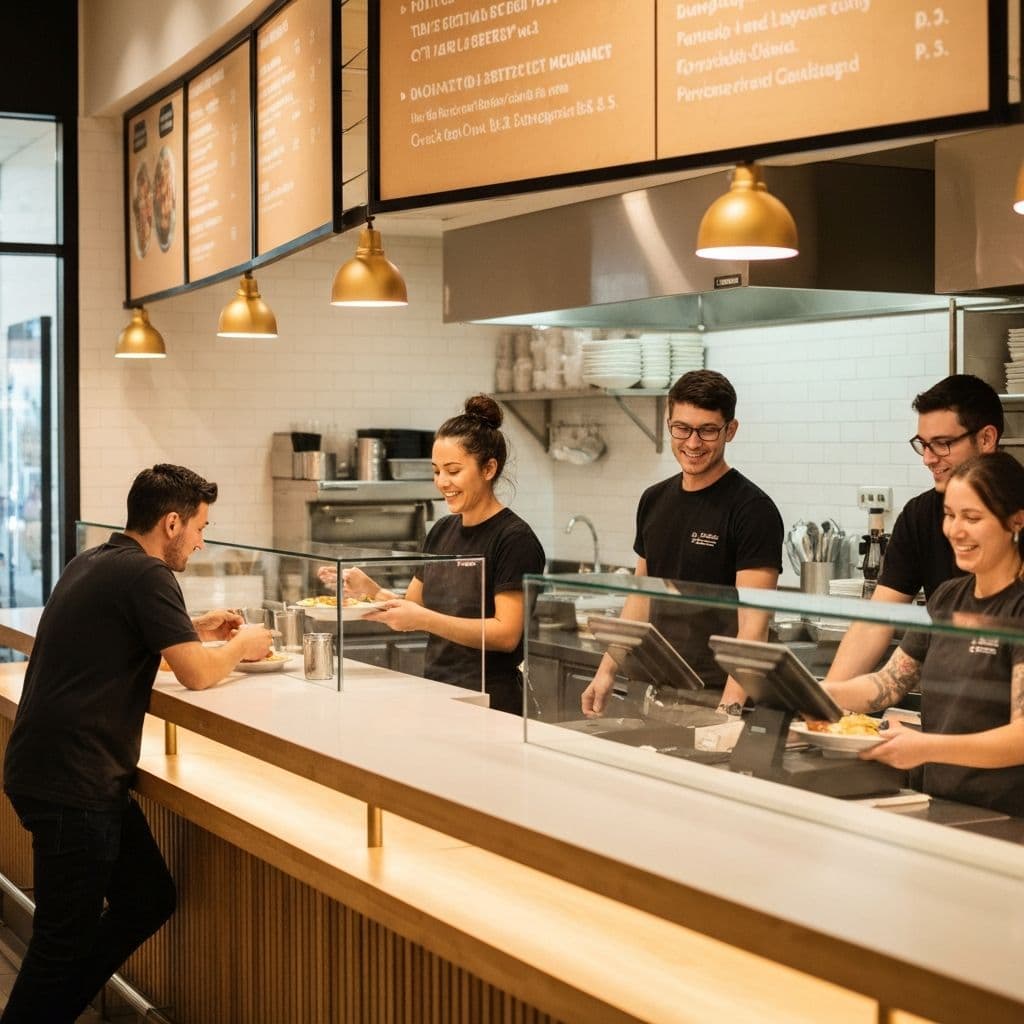
Digital menu boards are large display screens—typically LED or LCD monitors—mounted prominently in restaurants to showcase menu items through high-resolution images, videos, and dynamic content. These boards act as both informational displays and powerful marketing tools, capturing customer attention with motion graphics and appetizing photography while providing clear, easily readable menu information.
Digital Menu Board Advantages
- Powerful visual marketing: High-resolution displays with video and animation capabilities drive appetite appeal and impulse purchases far more effectively than static text
- No customer technology required: Works universally for all customers regardless of smartphone ownership or technical comfort
- Prominent placement: Large displays positioned behind counters or in high-traffic areas command attention and influence purchasing decisions
- Dynamic content rotation: Screens can cycle through different menu offerings, highlighting breakfast in the morning, lunch midday, and dinner in the evening
- Brand consistency: Centrally managed displays ensure identical branding and messaging across all locations
- Faster order decisions: Customers standing in line can preview and decide on orders before reaching the counter, improving throughput
- Promotional flexibility: Limited-time offers, seasonal items, and special promotions can be highlighted instantly without reprinting
Digital Menu Board Limitations
- Significant upfront investment: Commercial-grade displays cost $2,000-$10,000 per screen, plus installation and mounting expenses
- Longer implementation timeline: Installation typically requires 1-2 weeks including electrical work, mounting, and content setup
- Limited menu capacity: Screen real estate constrains how many items can be displayed simultaneously, requiring careful menu engineering
- Fixed positioning: Once installed, boards cannot be easily relocated, making them less flexible than QR solutions
- Ongoing maintenance: Hardware requires regular cleaning, occasional repairs, and eventual replacement due to screen degradation
- Energy consumption: Large displays running continuously add to utility costs, though LED technology has improved efficiency
Head-to-Head Comparison
| Factor | QR Code Menus | Digital Menu Boards |
|---|---|---|
| Initial Cost | $50-$300/month (software only) | $2,000-$10,000 per screen + installation |
| Implementation Time | 1-3 days | 1-2 weeks |
| Visual Impact | Low - personal device viewing | High - large displays with video capability |
| Customer Accessibility | Requires smartphone and internet | Universal - no customer technology needed |
| Menu Capacity | Unlimited scrolling space | Limited by screen real estate |
| Best Service Model | Full-service, table service | Quick-service, counter ordering |
| Ordering Integration | Easy - built into many platforms | Display only - requires separate ordering |
| Flexibility | High - codes portable, easily relocated | Low - fixed installation |
Use Case Recommendations: Choosing the Right Solution
Choose QR Code Menus When:
- You operate a full-service restaurant where customers dine at tables
- Budget constraints prioritize minimal upfront investment
- Your menu changes frequently or seasonally, requiring constant updates
- You have an extensive menu with dozens of items that wouldn't fit on display boards
- Your customer base is tech-savvy and comfortable with smartphone usage
- You want integrated ordering capability to reduce server workload
- Quick implementation is critical (seasonal locations, temporary venues)
IDEAL FOR: Casual dining, fine dining, cafes, bars, breweries, outdoor seating areas
Choose Digital Menu Boards When:
- You operate a quick-service or fast-casual restaurant with counter ordering
- Visual marketing and appetite appeal are critical to driving sales
- You serve customers who may not have smartphones (airports, stadiums, food courts)
- Your menu is concise enough to display on screens (typically 20-30 core items)
- You want to influence purchase decisions while customers wait in line
- Brand consistency across multiple locations is a priority
- You have budget for significant upfront investment with long-term ROI focus
IDEAL FOR: Fast food, coffee shops, bakeries, delis, food trucks, franchise chains
Hybrid Approaches: Getting the Best of Both Worlds
Many successful restaurants don't choose one solution exclusively—they implement both QR code menus and digital menu boards strategically to serve different customer touchpoints. This hybrid approach maximizes the advantages of each technology while minimizing their respective limitations.
A typical hybrid implementation might include:
- Digital menu boards behind the counter for high-visibility promotions and core items
- QR code menus at tables for detailed browsing, customization, and direct ordering
- Paper backup menus available upon request for customers uncomfortable with digital options
This approach serves all customer preferences while leveraging each technology where it performs best. Fast-casual chains like Panera Bread successfully use this model, with digital boards highlighting featured items while QR codes enable table delivery orders.
Cost Analysis: Total Cost of Ownership
| Cost Category | QR Code Menu | Digital Menu Board |
|---|---|---|
| Hardware | $0-$200 | $2,000-$10,000 |
| Installation | $0 | $500-$2,000 |
| Software (Monthly) | $50-$300 | $100-$400 |
| Content Creation | $500-$2,000 | $2,000-$8,000 |
| Annual Maintenance | $0 | $500-$1,500 |
| 3-Year Total Cost | $2,300-$13,000 | $8,500-$36,900 |
Decision Framework: Your Restaurant's Digital Menu Strategy
Making the right choice between QR code menus and digital menu boards requires honest assessment of your restaurant's specific circumstances. Use this framework to guide your decision:
- 1
Identify Your Primary Service Model
If customers order at tables → QR codes | If customers order at counter → Digital boards
- 2
Assess Your Budget Reality
Under $2,000 available → QR codes | $5,000+ available → Digital boards feasible
- 3
Evaluate Menu Complexity
30+ items with extensive descriptions → QR codes | 20 or fewer core items → Digital boards
- 4
Consider Customer Demographics
Tech-savvy, smartphone-heavy clientele → QR codes | Diverse ages/tech comfort → Digital boards
- 5
Define Success Metrics
Goal is convenience and order accuracy → QR codes | Goal is visual marketing and impulse sales → Digital boards
Neither solution is universally superior—the right choice depends entirely on how well the technology aligns with your restaurant's operational model, customer base, and business objectives. By carefully weighing these factors against the comparative advantages and limitations outlined in this guide, restaurant managers can make informed decisions that maximize both customer satisfaction and return on investment.